
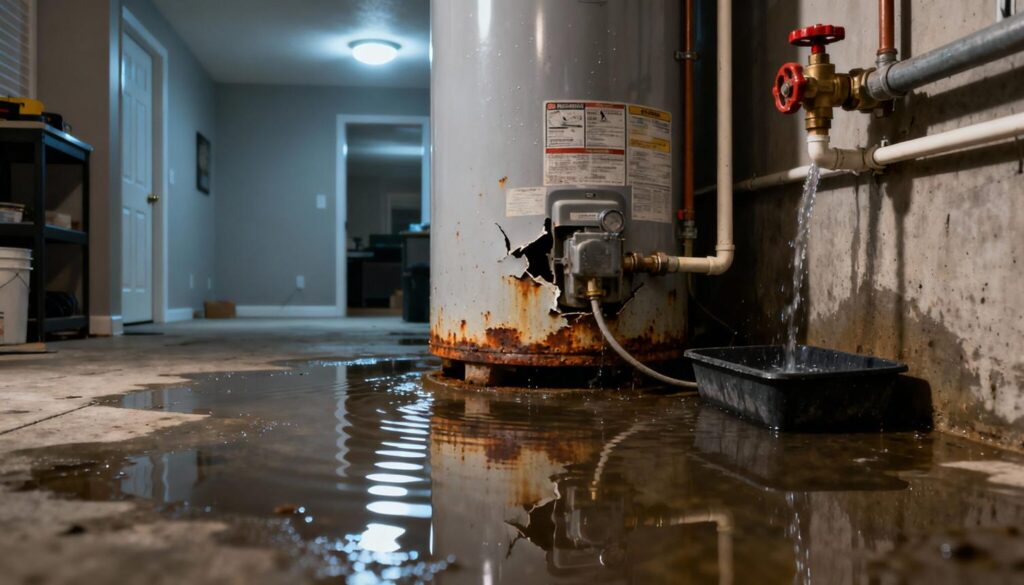
If you own a home in Spokane with a basement – especially in older neighborhoods like South Hill, Cliff/Cannon, Manito, or Peaceful Valley – there’s a good chance your water heater and your sump pump (or lack of one) are more connected than you think. When one fails, the other is often your only line of defense between a minor inconvenience and thousands of dollars in water damage.
Let’s break down why these two systems matter together, not just separately.
Why Water Heaters Fail (and Why It’s More Common Than You’d Think)
Most residential water heaters last 8–12 years. Spokane’s hard water accelerates sediment buildup inside the tank, which corrodes the tank lining from the inside out over time. Common failure points include:
- Sediment buildup at the bottom of the tank, causing rust-through
- Pressure relief valve failure, leading to slow leaks or sudden ruptures
- Corroded fittings and connections that weaken with age
- Full tank rupture – when this happens, 30–50 gallons of water hit your floor in minutes
If your water heater is sitting in a basement or utility closet without a floor drain nearby, that water has nowhere to go – except across your floor and into your belongings, drywall, and subfloor.
A failing water heater rarely gives much warning. If yours is nearing 10 years old, has visible rust at the base, or has needed repairs recently, it’s worth having it inspected before it fails on its own schedule.
What Happens When There’s No Sump Pump to Back You Up
A sump pump isn’t just for spring snowmelt or heavy rain – it’s your basement’s emergency exit for water, no matter where that water comes from. Without one, a water heater failure (or a sudden groundwater intrusion) means:
- Standing water that can take days to fully dry out
- Mold and mildew growth starting within 24–48 hours
- Warped flooring, ruined drywall, and damaged storage items
- Potential foundation and structural moisture issues over time
Homes without a functioning sump pump are essentially relying on luck. In Spokane, where our freeze-thaw cycles and spring runoff already put pressure on basements and foundations, that’s a risky bet.
How a Sump Pump Protects Your Home
A properly installed sump pump sits in a basin at the lowest point of your basement and automatically activates when water levels rise – whether that’s from groundwater, a burst pipe, or yes, a failed water heater. Key benefits:
- Automatic activation – no need to be home for it to work
- Battery backup options – keeps working even during a power outage (which often coincides with storms)
- Fast response – pumps water out before it has a chance to spread or soak in
- Peace of mind during Spokane’s wetter months and spring thaw
If your basement has ever felt damp, smelled musty, or you’ve noticed water stains near the floor, it’s worth having a sump pump system evaluated or installed.
The Local Factor: Why This Matters More in Spokane
Spokane’s climate creates a unique one-two punch for basements:
- Winter freeze-thaw cycles shift soil and put pressure on foundations, sometimes creating small cracks where water can seep in.
- Spring snowmelt raises the water table quickly, especially in neighborhoods closer to the river or with older clay-tile drainage systems.
Combine either of these with an aging water heater sitting quietly in your basement, and you’ve got the exact scenario that leads to emergency calls and expensive water damage claims.
What You Can Do Now
The smartest approach is to address both systems proactively, rather than waiting for a failure:
- Have your water heater inspected – especially if it’s 8+ years old, showing rust, or making unusual noises. Catching a slow leak early can save your flooring and walls.
- Have your sump pump tested (or installed if you don’t have one) – before spring thaw, not after the water is already rising.
- Check your battery backup – if your sump pump relies on electricity alone, a storm-related power outage could leave you unprotected at the worst possible time.
Doing both isn’t redundant – it’s complementary. Your water heater inspection reduces the chance of a flood. Your sump pump reduces the damage if one happens anyway.
Ready to Protect Your Basement?
Doing both isn’t redundant – it’s complementary. Your water heater inspection reduces the chance of a flood. Your sump pump reduces the damage if one happens anyway.
If you don’t have a sump pump – or aren’t sure the one you have still works — talk to our Spokane sump pump installation team before the next thaw or storm season hits.
Leave a Reply