
Most Spokane homeowners don’t think about their water heater until something goes wrong. It sits quietly in a utility closet, basement, or garage – doing its job day after day without any attention. But when a water heater fails, it doesn’t just leave you without hot water. A leaking or burst water heater can release dozens – sometimes hundreds – of gallons of water into your home, causing damage that spreads fast and costs far more to fix than the heater itself.
The critical mistake most homeowners make is focusing entirely on replacing the water heater while ignoring the water it already released. That water doesn’t disappear when the heater is replaced. It soaks into your subfloor, travels inside your walls, and creates the perfect conditions for mold growth – all within 24 to 48 hours.
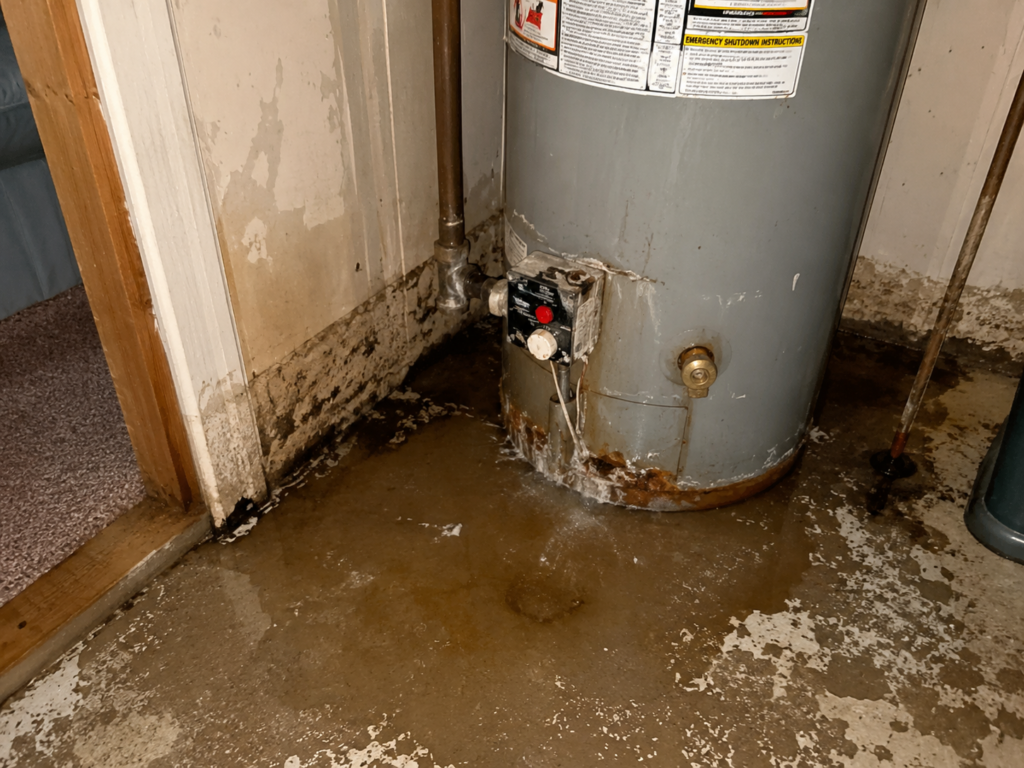
This guide covers everything Spokane homeowners need to know: how to spot a failing water heater before it becomes a flood, what to do the moment you discover a leak, and why professional water damage restoration is an essential part of the recovery.
Why Water Heaters Fail in Spokane Homes
Water heaters have a limited lifespan – typically 8 to 12 years for a standard tank unit. As they age, several failure points develop that can lead to leaks, flooding, or a complete tank rupture:
- Sediment buildup: Spokane’s water supply contains minerals that settle at the bottom of the tank over time. This sediment causes overheating, weakens the tank lining, and accelerates corrosion.
- Corrosion and rust: Once the internal anode rod – designed to absorb corrosion – is depleted, the tank itself begins to rust from the inside out. A corroded tank will eventually crack or rupture.
- Pressure relief valve failure: The temperature and pressure (T&P) relief valve releases pressure when it builds too high. When this valve fails or leaks, it’s a sign the system is under dangerous stress.
- Loose or corroded inlet/outlet connections: The pipe fittings connecting your water heater to your supply lines can corrode or loosen over years of use, creating slow leaks that go unnoticed until significant damage has occurred.
- Tank age and wear: A water heater over 10 years old in a Spokane home is statistically far more likely to fail. The combination of hard water, temperature swings, and continuous use takes a serious toll on the tank structure.
6 Warning Signs Your Water Heater Is About to Fail
Don’t wait for a flood to tell you something is wrong. Watch for these warning signs:
- Rusty or discolored hot water: Brown or reddish water from your hot taps is a strong sign of internal tank corrosion – one of the clearest indicators that failure is imminent.
- Rumbling or popping sounds: Loud noises during heating cycles are caused by sediment hardening at the bottom of the tank, forcing the heater to work harder and generating excessive heat.
- Water pooling around the base: Any standing water or moisture around the base of the heater – even a small amount – should be investigated immediately. Small leaks become large ones fast.
- Inconsistent water temperature: If your hot water runs out faster than usual or fluctuates unexpectedly, the heating element or thermostat may be failing.
- Visible rust or corrosion on the tank exterior: External rust near seams, fittings, or the base of the tank indicates that internal corrosion is likely already advanced.
- The unit is over 10 years old: Age alone is a risk factor. A water heater past its expected lifespan should be inspected annually and replaced proactively before it fails without warning.
What to Do the Moment You Discover a Water Heater Leak
Every minute a water heater leak goes unaddressed, more water soaks into your home’s structure. Here’s what to do immediately:
- Step 1 – Turn off the water supply to the heater: There is a dedicated shutoff valve on the cold water inlet pipe at the top of the heater. Turn it clockwise to stop the water supply. If you can’t locate it, shut off your home’s main water supply.
- Step 2 – Turn off the power or gas: For electric heaters, switch off the circuit breaker. For gas heaters, turn the thermostat dial to “Pilot” or shut off the gas supply valve. Never leave a heating element active in a leaking tank.
- Step 3 – Don’t touch standing water near electrical outlets: If water has reached outlets, appliances, or your breaker panel, do not enter the area. Shut off electricity to that zone at the breaker first.
- Step 4 – Document everything before cleanup: Take photos and video of all visible water, the heater, and the surrounding damage. Your insurance company will need this documentation.
- Step 5 – Remove water if safe to do so: Use towels, mops, or a wet-dry vacuum to remove standing water while waiting for professionals. The faster water is removed, the less it penetrates into structural materials.
- Step 6 – Call a water heater technician AND a water damage restoration team: The technician fixes the unit — the restoration team handles all the water damage it caused. Both calls are equally important.
The Damage You Can’t See Is the Damage That Costs the Most
After a water heater leak, the visible puddle on your utility room floor is just the beginning. Water from a leaking tank travels fast and far:
- Through the subfloor into the floor structure below
- Inside wall cavities, soaking insulation and wooden framing
- Under baseboards and flooring throughout adjacent rooms
- Into crawl spaces and basement areas
According to the U.S. Environmental Protection Agency (EPA), mold can begin growing on wet building materials within 24 to 48 hours of water exposure. Once mold takes hold inside a wall or under a floor, remediation becomes a significantly larger and more expensive project than the original water damage restoration would have been. This is why mopping up what you can see and running a household fan is not an adequate response to a water heater leak.
Professional Water Damage Restoration After a Water Heater Leak
A certified water damage restoration company brings tools and expertise that no DIY approach can match:
- Thermal imaging cameras to detect moisture hidden inside walls and floors without cutting into them
- Industrial moisture meters to measure exact moisture levels in structural materials and track the drying process daily
- Truck-mounted extraction units that remove water from flooring and subfloors far more effectively than consumer equipment
- Commercial air movers and dehumidifiers that dry structural materials from the inside out – not just the surface
- Antimicrobial treatments applied to all affected areas to prevent mold growth before walls are sealed back up
If your water heater has leaked and you’re not sure how far the water traveled, don’t guess. The team at Spokane WA Water Damage provides 24/7 emergency response across Spokane and handles the full restoration process — from initial water extraction through final structural repairs. They work directly with insurance companies and provide complete documentation of all damage and work performed.
Does Homeowner’s Insurance Cover Water Heater Damage?
The answer depends on the circumstances:
- Sudden and accidental leaks are usually covered: If the water heater failed unexpectedly, most standard homeowner’s insurance policies will cover the resulting water damage – though not necessarily the heater replacement itself.
- Gradual leaks are typically not covered: If the adjuster determines the leak was slow and ongoing – and that you should have noticed it earlier – they may deny the water damage claim.
- Proper documentation is essential: Photograph everything immediately. A professional restoration company can also provide detailed damage reports that directly support your insurance claim.
Always contact your insurance provider as soon as possible after discovering water damage. Delays in reporting can reduce or complicate your claim.
How to Extend the Life of Your Water Heater and Prevent Leaks
Proactive maintenance significantly reduces the risk of sudden failure:
- Flush the tank annually to remove sediment buildup that accelerates corrosion and reduces efficiency
- Inspect the anode rod every 3 years and replace it when depleted – this is the single most effective way to prevent internal tank corrosion
- Test the T&P relief valve annually to confirm it opens and closes correctly
- Insulate exposed pipes connected to the heater to reduce stress from Spokane’s winter temperature swings
- Replace any unit over 10 years old proactively – before it fails on its own terms and causes water damage
Final Thoughts
A failing water heater in Spokane is more than an inconvenience – it’s a water damage risk that can affect your floors, walls, and foundation within hours of a failure. The heater repair or replacement is the easy part. The water damage it leaves behind is what demands immediate, professional attention.
Don’t assume the problem is solved once the heater is replaced. If water entered your home, it needs to be fully extracted, dried, and assessed by professionals – before mold sets in and the damage compounds.
Spokane’s local water damage specialists are available 24 hours a day, 7 days a week – ready to restore your home completely.
Leave a Reply